 Share this

Part of Paradiski, one of France’s largest ski areas, Les Arcs offers amazing winter sports, on-mountain museums, vibrant après-ski, and very distinctive architecture.
Les Arcs. The famous French ski resort derives its name from the old Savoie dialect once spoken in this part of the Alps. Depending on who you believe, in English, it means either ‘the waters’ (a reference to the many streams and waterfalls in this part of the French Alps) or ‘the peaks’ (which sit on top of the mountains all around).
Most visitors to the lovely resort believe it has another meaning, however: arcs, as in arches – in reference to the arched buildings dating back to the late 1960s.
Forming part of the wider Paradiski ski area, Les Arcs is one of France’s larger ski resorts, boasting 200kms of terrain, served by 55 lifts. 70 per cent of the resort is above 2,000 metres – good news during the milder periods of winter.
There are actually four villages in all, each named after the altitude at which it sits: Arc 1600, Arc 1800, Arc 1950 and Arc 2000. Although each has its own character, the first two tend to attract family groups, while accommodation in the latter two is more expensive, meaning skiers there are often wealthier.
For newcomers, it can be confusing. Make sure you remember which altitude you’re staying at, otherwise, at the close of the day, when skiing back to your accommodation, you risk overshooting the mark.
The distinctive architecture
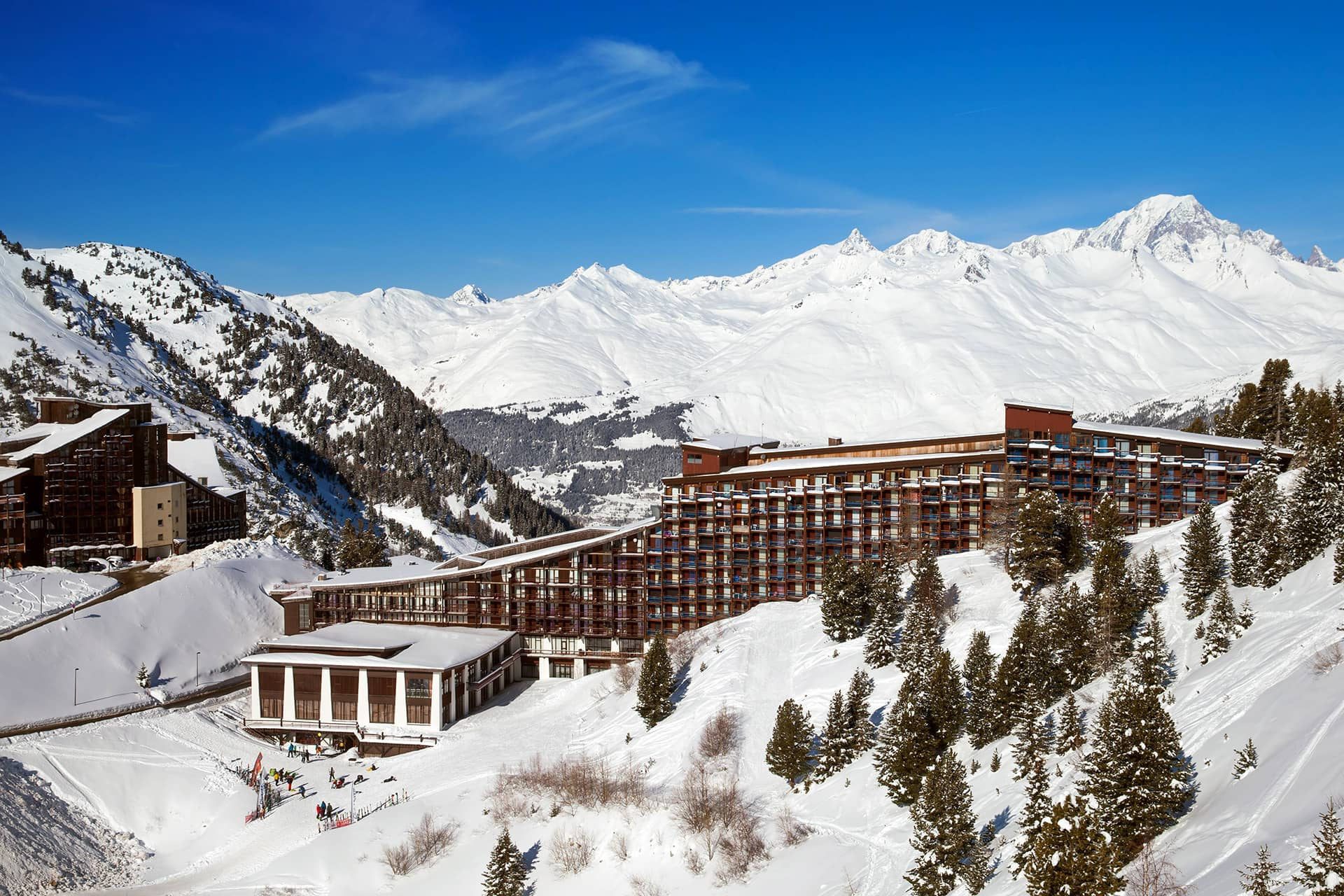
The first thing you notice on arriving here – either by car or on the funicular railway from Bourg-Saint-Maurice – is the distinctive architecture, dating from the 1960s onwards. Granted, it’s not for everyone. If you prefer cosy, wooden chalets with open fires, then the functional, modernist apartment buildings won’t appeal.
In Arc 1600, for example, you find La Cascade, a vast late 1960s building with 140 apartments spread over seven four-storey blocks, arranged in steps up the mountain slope. In the same village is Le Versant Sud, from the mid-1970s, a block of 232 apartments set into the side of the mountain. When covered with snow, the flat roofs are virtually invisible from above.
In Arc 1800, also dating from the 1970s, are the enormous Belles-Challes and Lauzières, with nearly 600 residences across 17 storeys. Again, the buildings follows the contour of the mountain slope.
Creative lead on the original design team for Les Arcs was French modernist Charlotte Perriand. “I wanted to establish a perfect harmony between the sky, the mountain pastures and mankind,” she once explained of her magnum opus.
After World War II, the French government was keen to promote mountain holidays for all its citizens. This coincided with a new policy of paid annual leave for all employees. The utilitarian buildings and apartments Perriand oversaw were all part of this democratisation of skiing, allowing lower-paid workers to enjoy winter holidays.
Experience first tracks
During a brutally cold week in early January, I was invited to discover Les Arcs for myself. Keen to experience all it had to offer, I signed up for an early morning first tracks experience. (It costs around €35, depending on which lift pass you hold, and is available on Wednesdays at Arc 1600, Arc 1800 and Arc 1950.)
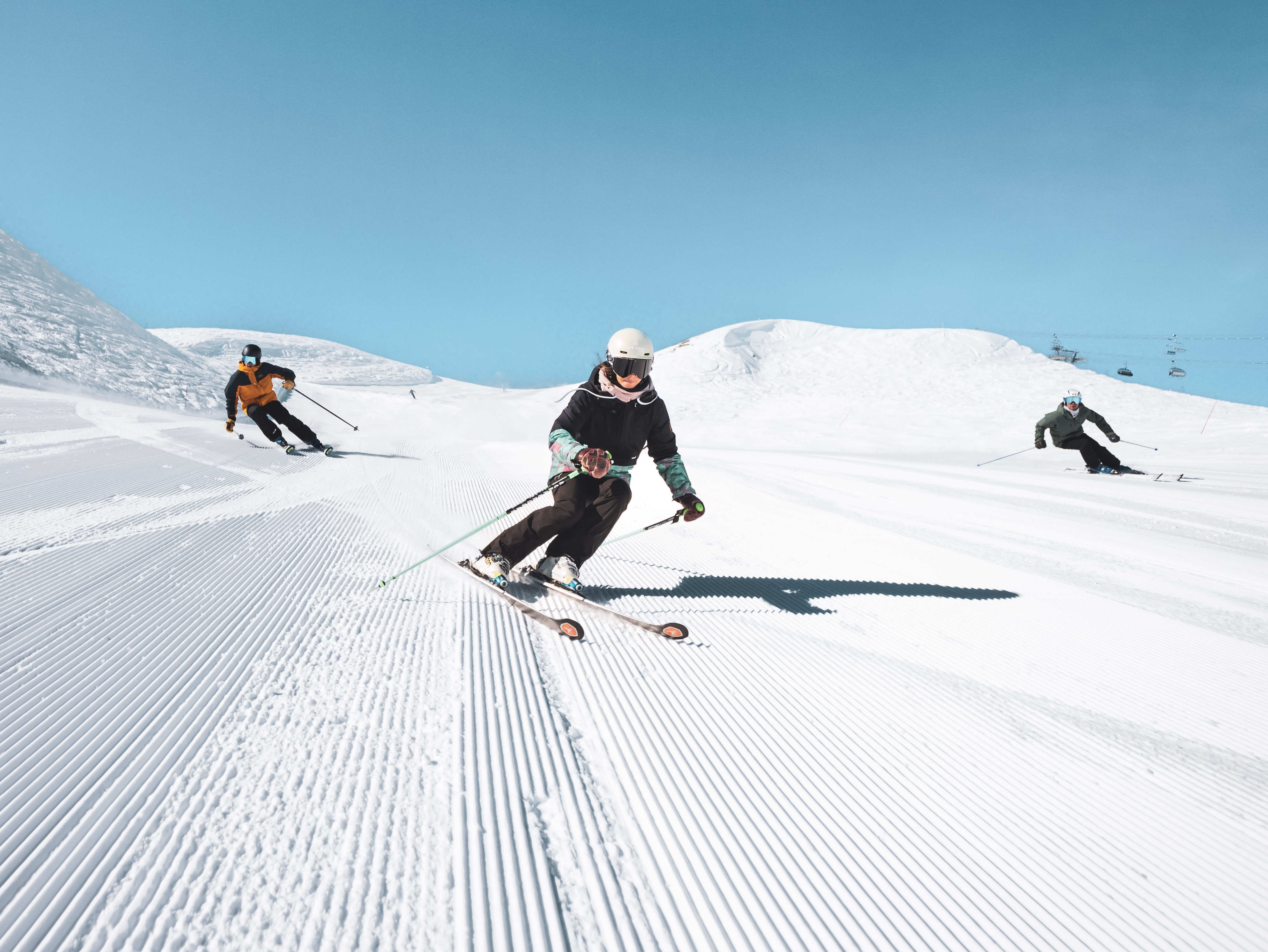
At 7.30am, long before any of the standard lifts had opened, I joined a group of shivering early-morning skiers, riding two chairlifts to the Col des Frettes, at 2,400 metres above sea level. From here, before the sun had risen, we had the pick of virgin pistes laid out before us, each one in perfect corduroy formation – having been groomed the previous night by the piste-bashers.
Afterwards, I had a quick breakfast at one of the mountain cafés, with views south across a distant mountain ridge. As the sun started to appear in the east, the cloudless sky behind the ridge changed colours accordingly – first dark pink, then deep orange, then pale yellow, and finally blue.
A great way to get an overview of Les Arcs is to take the cable car to the top of l’Aiguille Rouge, a mountain summit at an altitude of 3,230 metres. From here you ski the Piste de l’Aiguille Rouge for seven kms down to Villa Roger at 1,200 metres, dropping a massive 2,000 metres, all the while popping your ears and filling your thighs with lactic acid. This legendary run starts off with a scary-looking black section before easing into more manageable red pistes.
The zipline
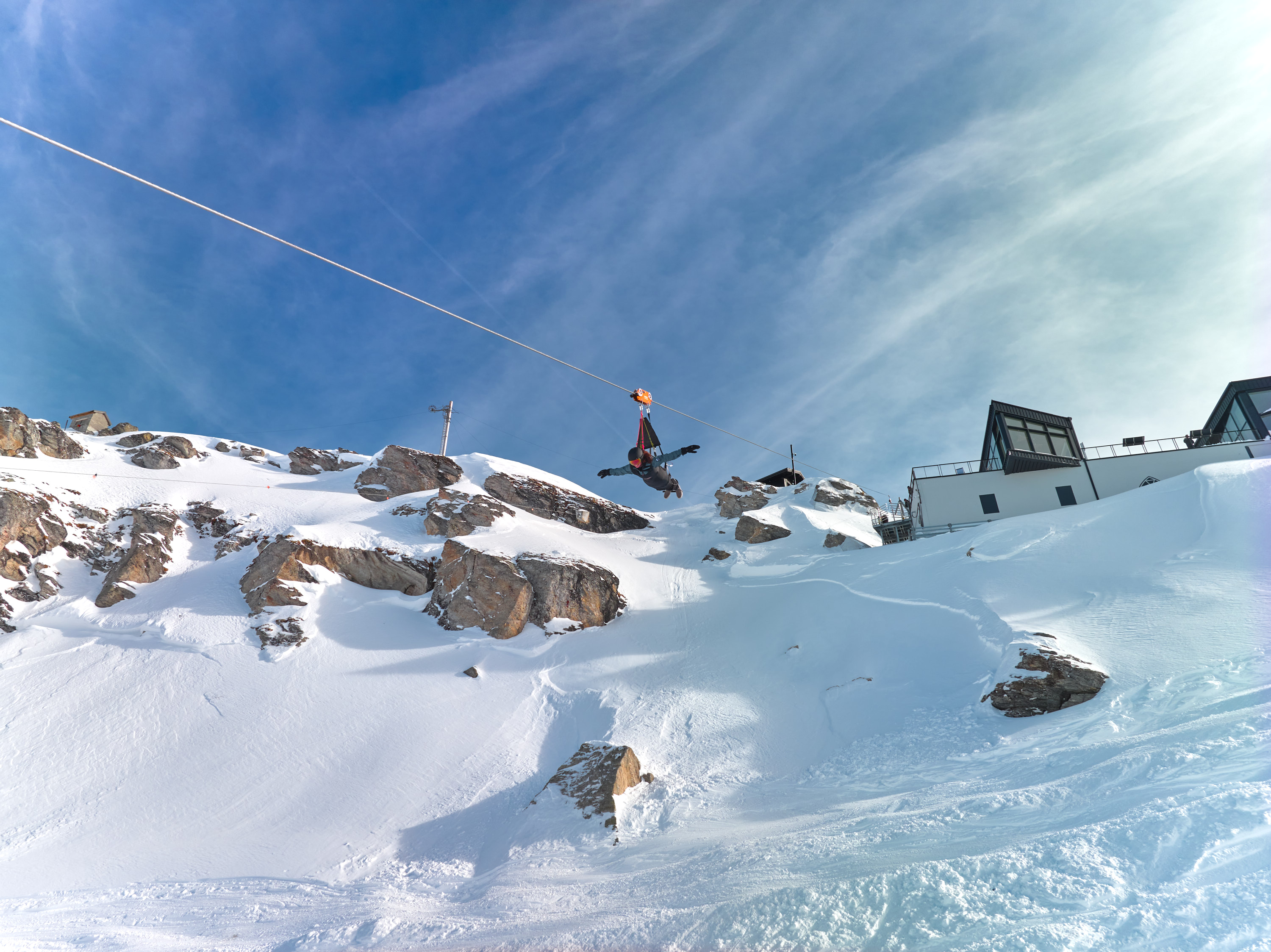
Next up, I headed for the top of the Varet cable car where the resort has built the Aiguille Rouge zipline. Offering single or tandem rides, it launches you down the mountainside at speeds up to 80mph.
Flying down, with the cold air buffeting my cheeks, I hardly had time to take in the amazing views before I’d swung to a halt at the bottom. Prices currently start at €40, depending on which ski pass you have.
The on-mountain museums
If you’d rather save your energy, there are plenty of less strenuous activities on the mountain. At the top of the Vallandry cable car, for example, is the Muséum des Animaux de Montagne – a kid-friendly attraction filled with all manner of stuffed beasts, the living versions of which you might feasibly bump into in the Alps.
Greeting you at the door is a brown bear, brandishing his sharp claws and fangs. Elsewhere you’ll find deer, foxes, marmots, martens, goats, chamois and even a big, bad wolf.
Unsuspecting visitors may be confused by the inclusion of a small white species with horns and a bushy tail called a dahu. The museum explains how this cute little beast is born with legs longer on one side of its body than on the other, so it can easily walk round steep mountains, “but only in one direction”. Needless to say, the dahu is mythical.
Also on the mountain is the Galerie des minéraux, which explores man’s exploitation of the Earth’s minerals and precious stones. You’ll be literally dazzled by the various rocks on display.
Après-ski in Les Arcs
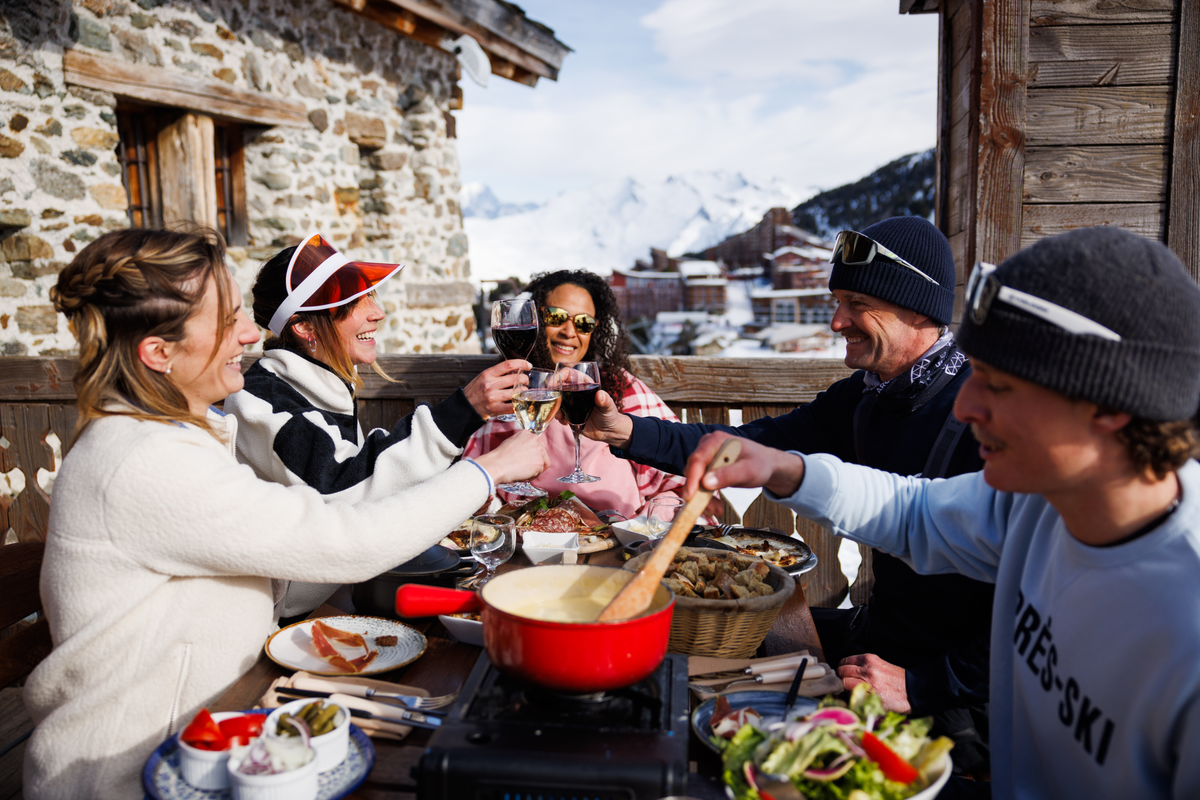
After all that learning, skiers will need refreshment. One of the best spots on the mountain to find this is at the infamous après-ski bar and restaurant La Folie Douce. In the afternoons, hundreds of skiers and snowboarders congregate here for the DJs, the dancers, the performers and, of course, the booze. Dancing on tables isn’t obligatory, but it is encouraged.
As I left La Folie Douce, I could see a vast bank of clouds rolling in from the west – all grey and fecund with snow. That night, and the following weekend, huge amounts fell across the resort, blanketing everything in white. Winter proper was on its way. Les Arcs was coming into its own.

 December 23, 2025

